ServicesWhole-Home Rewiring
Whole-Home Rewiring in Forest Hill
We replace worn, ungrounded or undersized wiring throughout your home with new copper circuits, grounded outlets and properly sized breakers. Floors get covered, wall openings stay small, and at the end of each day we tell you what got done and what comes next.
Why Replacing the Wiring Beats Patching It
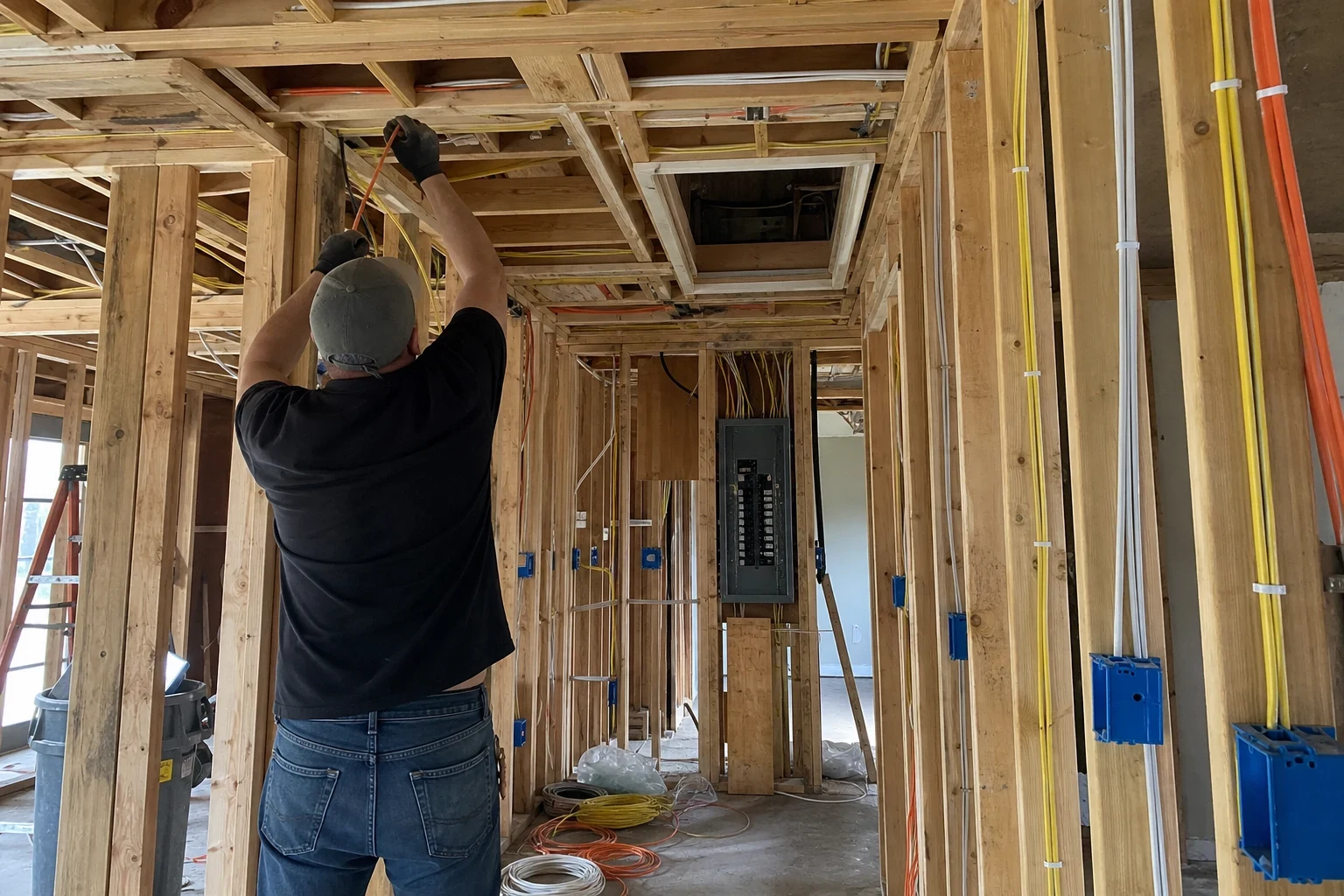
A rewire runs fresh cable from the panel to each switch, outlet and light and takes the old runs out of service. It fits when the wire is the trouble, not a single device: cracked, brittle insulation, ungrounded two-wire circuits, or aluminum branch wiring whose terminations keep working loose. Fixing those outlet by outlet leaves the failing wire behind the drywall.
When just one circuit is misbehaving, electrical repair is often the smarter choice, and we will tell you that once we have looked. If the panel is close to full capacity too, a panel upgrade often goes with the rewire so each new circuit has a properly sized breaker.
You will be living in the house while we work, and we plan each day around that.
What Comes With a Rewire
Fresh copper circuits
Each breaker gets copper sized for it: 14-gauge for 15-amp lighting circuits and 12-gauge for 20-amp kitchen, bath and laundry circuits. We disconnect the old cable at both ends so nobody can power it up again.
Grounding plus GFCI and AFCI protection
All receptacles are grounded. Kitchens, baths, garages and outdoor spots get GFCI protection, and AFCI protection goes wherever current code requires it, so a frayed cord or a loose splice trips the breaker before it can heat up inside a wall.
Sturdy boxes and connections
Old shallow boxes too cramped for today's devices are swapped out. Wires go on screw terminals or clamp-style connections instead of push-in backstabs, which work loose after years of heat cycles.
Linked, hardwired smoke alarms
When the rewire calls for them, we put in hardwired smoke alarms tied together, so when one goes off they all go off.
Few, small, patched holes
We fish most cable through the attic and the existing wall cavities. Where a run can't be fished, we cut a small access hole and close it with a drywall patch ready for paint.
Permit and inspection scheduling
We get the permit the local jurisdiction requires and book the rough-in and final inspections, so the paperwork stays off your plate.
Clues That Your Wiring Is Due for Replacement
- Mostly two-prong outlets
- An outlet without a ground gives fault current nowhere safe to go. Putting a three-prong outlet on that same ungrounded circuit just covers it up.
- Cable wrapped in cloth or rubber
- Old insulation dries and cracks with age, faster in an attic that bakes all Texas summer. When it falls away near a box, bare wires can make contact.
- Warm cover plates or a slight burning odor
- A switch or outlet cover that is warm to the touch signals a loose or overloaded connection. When it happens in more than one place, the wiring is usually what they share.
- Aluminum wire on branch circuits
- Aluminum grows and shrinks with heat more than copper, so its connections loosen over the years. Check for dull silver wire at an outlet or "AL" stamped on the cable jacket.
- Lights dip when an appliance turns on
- If the lights dim each time the microwave or a window AC starts, the wire is often too small or circuits are shared in ways never meant for the loads homes run now.
How the Work Runs, Day by Day
- 1
Walkthrough and circuit map
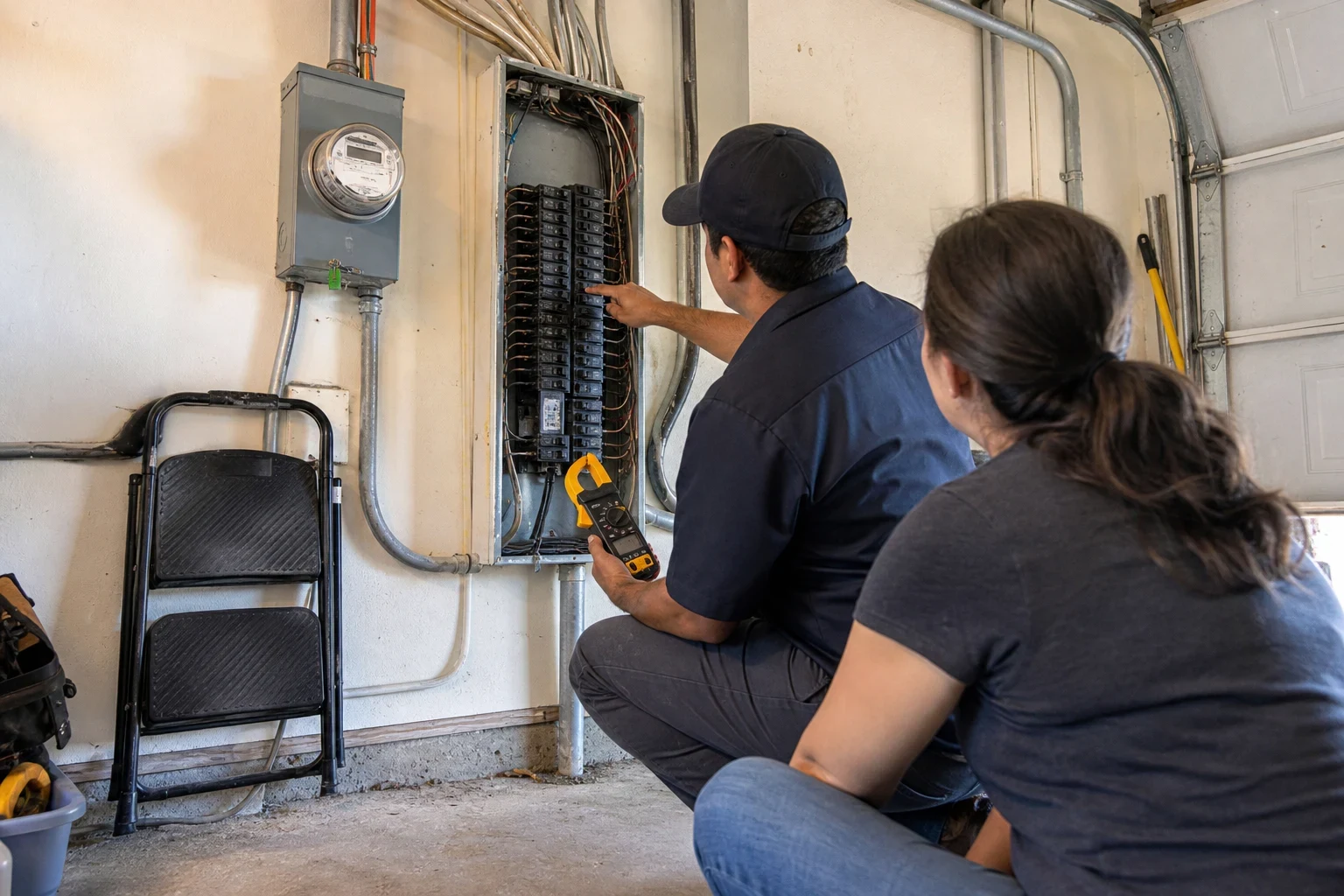
We open the panel, test circuits and trace which breaker feeds which room. You get a plain account of what we found and why it matters.
- 2
Written scope and schedule
The estimate lists every circuit and device, which rooms we work in on which days, and where openings will be cut. You know which rooms will be off-limits before we arrive.
- 3
Protecting the house
Drop cloths and runners go down along every path we walk, furniture gets covered in plastic, and we use boot covers indoors. Outside, we keep ladders and cable off flower beds and set tools on tarps, not the lawn.
- 4
Rough-in, room by room
We work one area at a time and restore power to finished circuits at the end of each day where we can, so you keep a working kitchen and bedroom. Before we leave, we tell you what is live and what is next.
- 5
Inspection, devices and cleanup
After the rough-in inspection passes, we set devices, patch openings and vacuum each room. The final inspection closes the permit.
What Moves the Price of a Rewire
A rewire is priced from your house itself, so we quote after walking it, not over the phone. Your written estimate lists circuits, devices, patching and permit fees on separate lines, which lets you match every part of the total to actual work.
- How many circuits you need
- Each added room brings more cable, boxes and devices into the job. Kitchens and baths also need dedicated 20-amp circuits and GFCI protection.
- Attic and wall access
- A roomy attic lets us drop cable straight into walls. On slab homes every run comes from above, so low-clearance attics, insulation depth and fire blocking all add time.
- Wall finishes
- Drywall patches quickly. Plaster, paneling and tile take more care to open and close.
- Panel condition
- If the existing panel lacks space or capacity for AFCI and GFCI breakers, a panel upgrade becomes part of the job.
Common Rewiring Questions
- Will we need to stay somewhere else during the rewire?
- In most cases, no. We work through the house one room at a time and try to get completed circuits powered back up by evening. Some rooms will be without power for periods, and the schedule spells out which and when.
- How long does rewiring a whole house take?
- It varies with the size of the house, how easy the attic is to work in and how many walls need an opening. Once we've walked through, your estimate includes a daily plan with the inspection dates built in.
- How many walls get opened?
- Only as much as the framing forces. Most cable comes down from the attic through the top plates, and we make a small opening only where blocking or a corner blocks the path. Every opening is patched and ready for paint.
- Is a permit pulled for the rewire?
- It will. We obtain the permit your local jurisdiction requires and are there for the rough-in and final inspections, which gives you a record of the work when you sell the house or file an insurance claim.
- Is it possible to rewire a little at a time?
- In many homes, yes. We can start with the kitchen, baths and other trouble spots, then plan the later phases so wire sizes and the panel layout still work for the whole house.
Replace the Old Wiring Without Wrecking the House
We walk your home, test the circuits and lay out a room-by-room plan before any wall is opened. Book a service visit and get your quote by phone.