ServicesSurge Protection
Surge Protection in Forest Hill
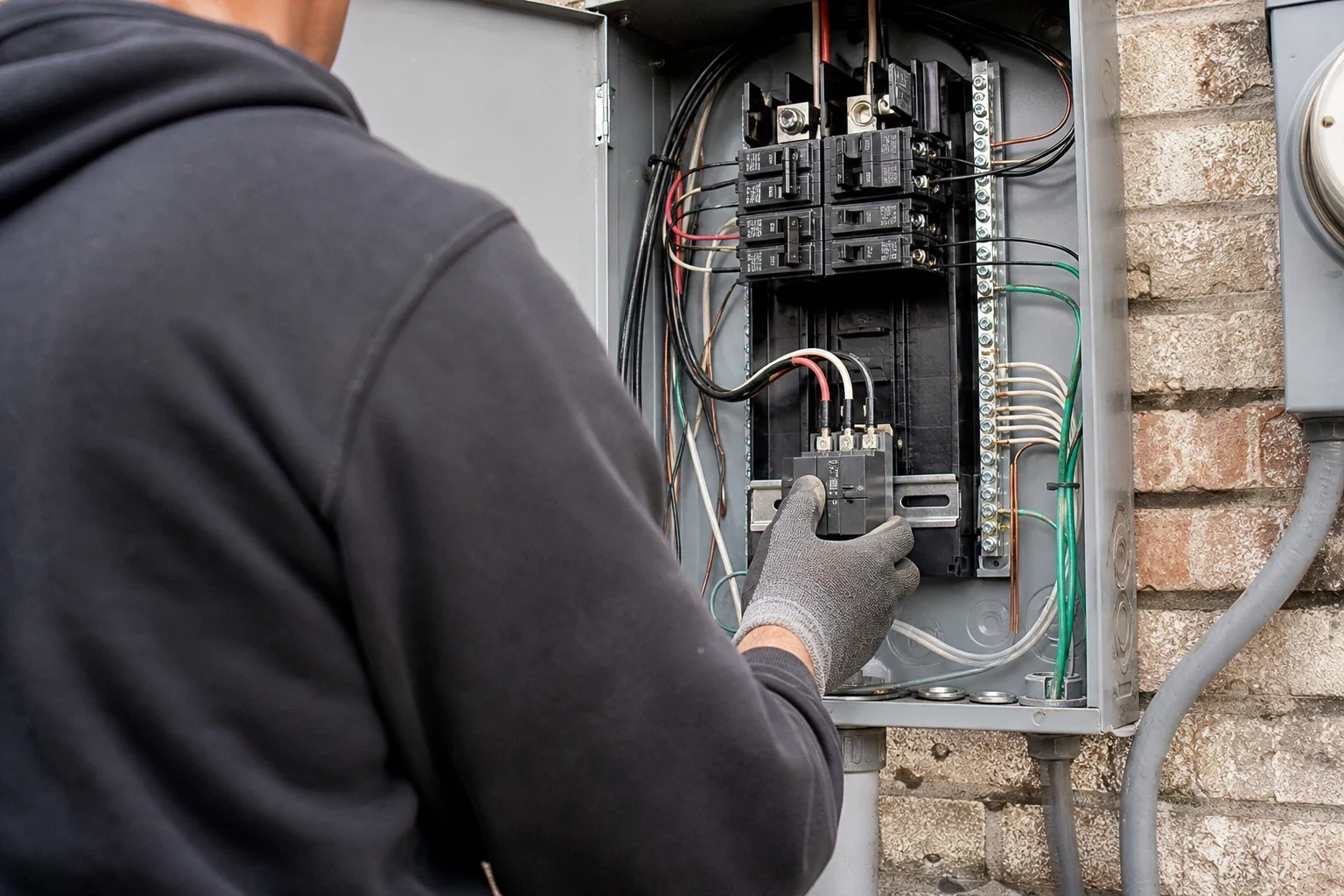
Spikes from storms, utility switching and your own AC compressor get clamped at the panel before they reach your electronics. We mount a surge protective device on its own breaker, test the grounding it depends on, cover the floor below the panel and let everyone know before the power goes off.
How Panel-Level Surge Protection Works
The device, called an SPD, sits on or beside your main panel and ties into the bus bars through its own breaker. Its working parts are metal oxide varistors (MOVs). At ordinary voltage they sit idle. The moment voltage climbs, they become conductive within nanoseconds and shunt the extra energy to ground rather than letting it pass through your refrigerator's control board or a TV power supply.
Most surges are not lightning. They come from the utility switching loads and from motors inside your home, like the AC compressor, pool pump or well pump, starting and stopping many times a day. Those small, repeated spikes wear down the electronics in modern appliances over time. Spring thunderstorms add the big hits on top of that.
A panel SPD is the first layer. It works best with plug-in protectors at sensitive equipment and with a grounding system that can actually carry the surge away. That is why we look at all three, not just the box we are installing.
What the Installation Includes
Grounding and bonding check
The device needs a low-resistance route to earth to do its job. We look at the conductor running to your ground rod, the clamp where it attaches and the bond between neutral and ground at the service. Corroded or loose connections are fixed before the SPD is mounted.
Device sized to your service
We match the SPD to your service voltage and amperage and choose a unit with a sensible surge current rating and a low voltage protection rating. A lower clamping number means less voltage gets through to your equipment.
Short, straight lead connection
Every extra inch of conductor between the SPD and the bus adds impedance and lets more voltage through. We mount the device as close to the panel as the layout allows, keep the leads short and avoid sharp bends.
Dedicated breaker and clean panel work
The SPD lands on its own double-pole breaker, labeled on the panel directory. Wiring is dressed neatly so the next person who opens the panel can read it.
Status indicator walkthrough
Most units have lights that show whether the protection is still active. Before we leave, we show you where they are and what a failed reading looks like.
Signs Your Home Could Use Surge Protection
- Electronics failing early
- A garage door opener, microwave or smart thermostat that dies after a year or two often has a scorched control board. Repeated small surges are a common cause.
- Lights dim or flicker when the AC kicks on
- That dip, and the spike that follows when the compressor shuts off, shows motor loads are disturbing your voltage. The same transients hit everything else on the system.
- Damage after a nearby lightning strike
- If a storm took out a modem, a TV and a doorbell camera at once, the surge likely came in on the power or communication lines. A panel SPD reduces the next one.
- New expensive equipment
- A new HVAC system, induction range, EV charger or home battery all depend on sensitive electronics. Protecting them at the service is a small step next to the cost of replacing a board.
- Panel work coming up
- If you are planning a panel upgrade or service replacement, adding an SPD at the same time saves a second shutoff. Newer code editions call for one on replaced services in many jurisdictions.
How the Visit Goes
- 1
Look before we open anything
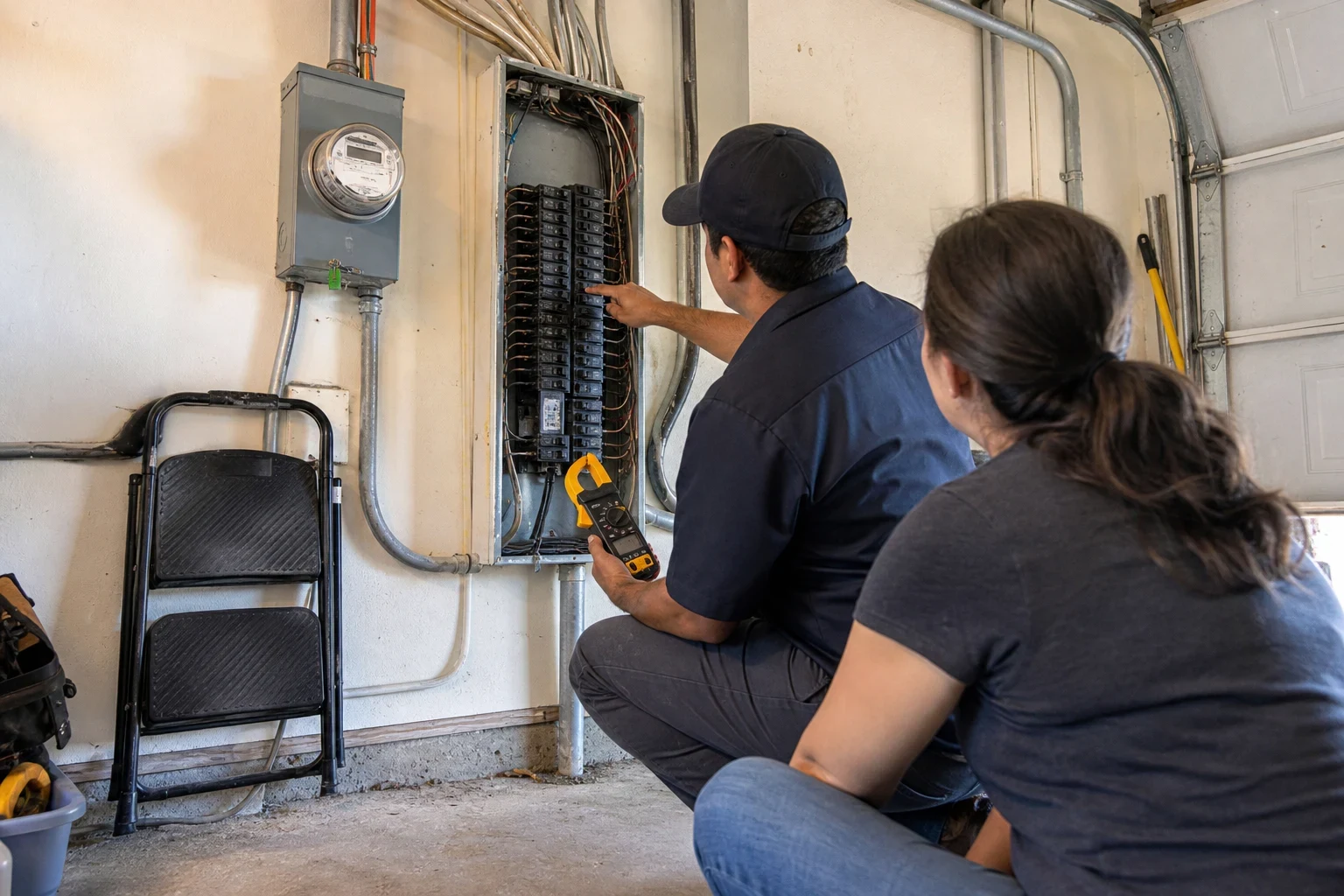
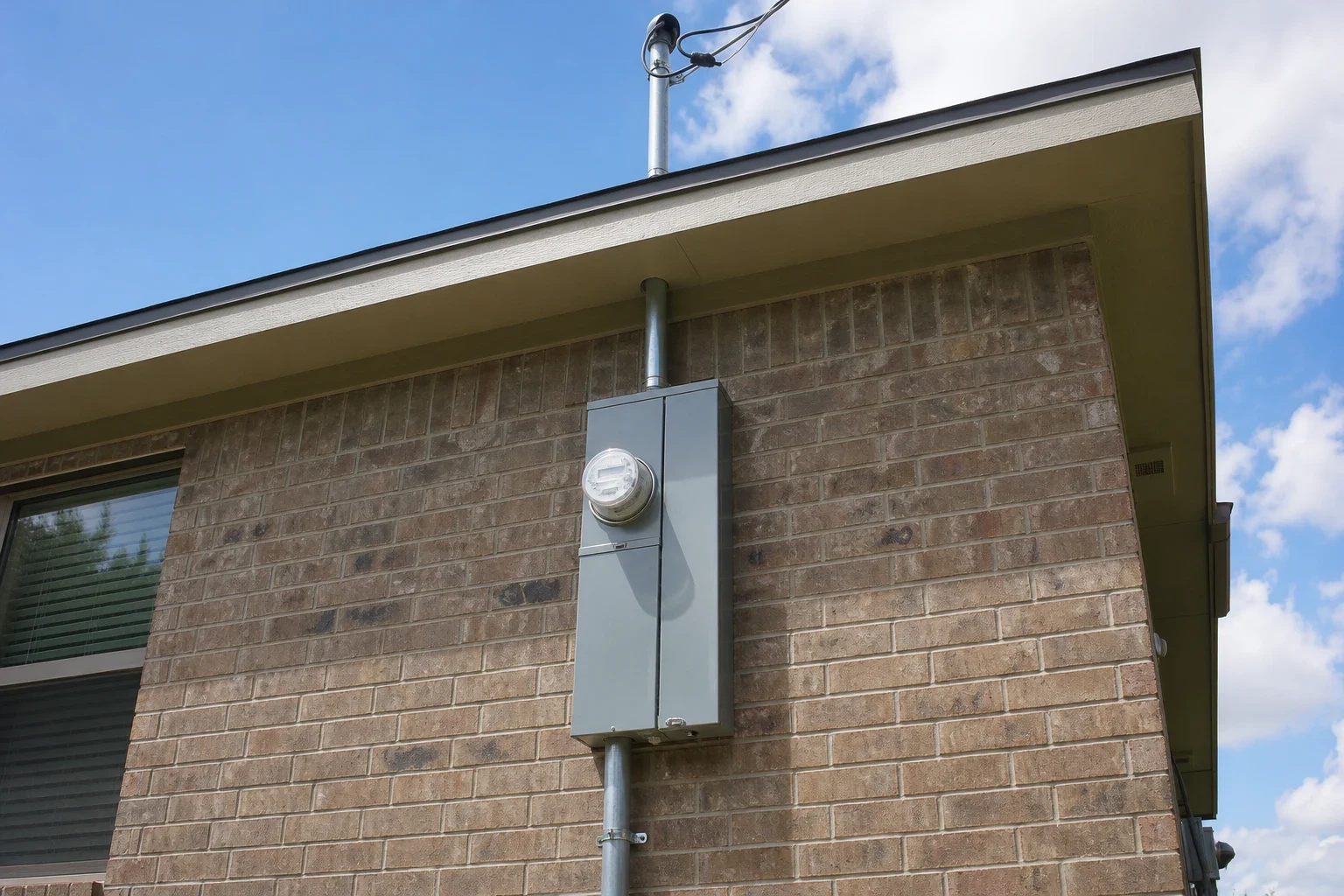
We start at the meter and panel, check the main breaker rating and open space, and find the grounding electrode connection outside. If that path runs through flower beds, we step carefully and put back any mulch we move.
- 2
Prep the work area
We lay a drop cloth under the panel, whether it sits in a garage, utility room or hallway. Then we tell the household how long the power will be off and which devices, like computers, should be shut down first.
- 3
Install and correct
With the main off, we mount the SPD, install its breaker, land the leads and fix any grounding or bonding problems we found. Most installs on an accessible panel take a couple of hours.
- 4
Restore power and verify
We turn the main back on, confirm the status lights, check that clocks and Wi-Fi come back up, and clean the area. You get a plain explanation of what we did and anything we noticed that is worth watching.
What Affects the Cost
Surge protection is one of the more predictable jobs we do, but every panel is a little different. The main variables are the device itself and what we find at the panel and the grounding. We give you the price by phone or at the visit before any work starts.
- Device type and rating
- A Type 2 SPD on the load side of the main is the usual choice. Higher surge current ratings and units with replaceable modules or remote alarm contacts cost more.
- Panel space and condition
- If there is no open space for a double-pole breaker, we may need tandem breakers or a small rearrangement. A panel with damaged bus bars or a recalled breaker line changes the conversation.
- Grounding corrections
- A missing bonding jumper, a loose ground rod clamp or an undersized grounding conductor adds parts and time, and the SPD will not work right without them.
- Bundling with other work
- Adding an SPD during a panel upgrade or rewiring job costs less than a standalone visit because the power is already off and the panel is already open.
Surge Protection Questions
- Can a surge protector handle lightning hitting my house?
- Nothing installed at the panel can guarantee protection from a strike that lands on your house itself, though strikes like that are rare. The panel SPD is built for what happens far more often: lightning hitting nearby and pushing surges down the utility lines, plus the daily spikes from motors and utility switching. Against those, it cuts damage substantially.
- Do I still need plug-in surge strips?
- Yes, for sensitive equipment. The panel device knocks a large surge down to a level that point-of-use strips can finish handling. Strips also protect against spikes that start inside your home on a branch circuit, which the panel SPD sees less of.
- Do surge protectors wear out?
- They do. The MOVs lose a little capacity with every spike they absorb, and a single large hit can exhaust them in one event. Before we leave, we point out the indicator lights on the unit so you can check them yourself, especially after a storm. A dark or fault light means the device or its plug-in module is due for replacement.
- Can you add one to an older panel?
- Usually, as long as the panel is in sound condition and has room for the breaker. If the panel itself has problems, we will tell you plainly and explain how surge protection fits into a panel upgrade instead.
- Will I lose power for long?
- Only during the installation itself, typically a couple of hours on a straightforward panel. We tell you ahead of time so you can shut down computers and plan around the outage.
Protect the Electronics You Already Own
We check your grounding, install the device on a dedicated breaker and leave the panel area as clean as we found it. One phone call sets up the visit.