ServicesTorque & Cleans
Panel Torque & Clean Service in Forest Hill
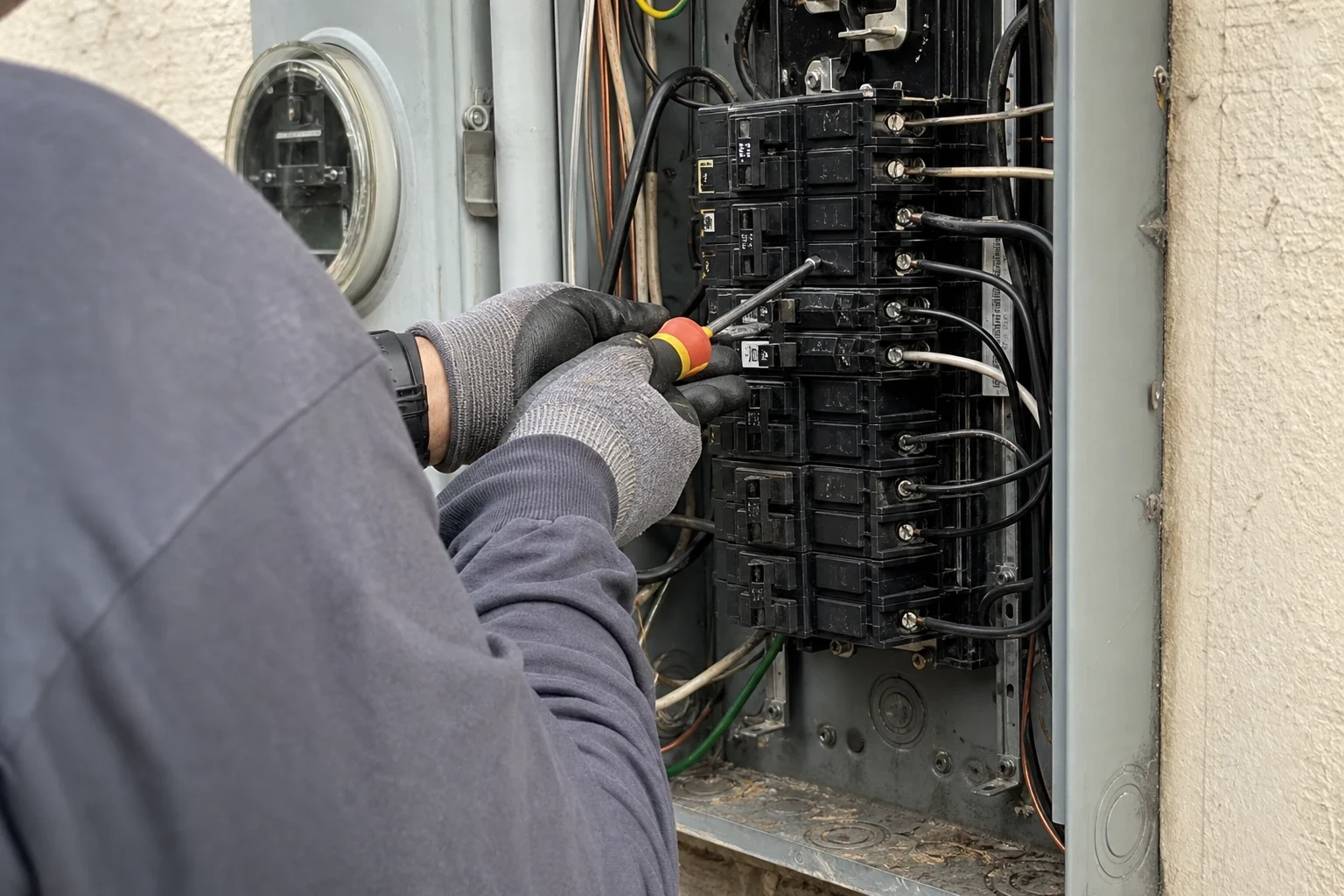
Loose screws inside a panel do not stay loose quietly. They heat, discolor and eventually arc. We shut your panel down, retighten each connection to the manufacturer's torque value and clean the enclosure, with your floors and flower beds protected while we work.
What a torque and clean actually fixes
Every time a circuit carries load, the copper or aluminum conductor warms and expands, then cools and contracts when the load drops. Over years of these cycles, the screw clamping that wire backs off a fraction at a time. A connection that was tight on install day can end up with enough resistance to run hot under a long air conditioning load.
A torque and clean is a maintenance visit for your panel. We use a calibrated torque screwdriver or wrench to bring breaker terminals, neutral and ground bar screws, and main lugs back to the values printed on the equipment label. Then we vacuum and brush out dust, lint, insect nests and debris that hold heat and can track current.
It is the right call for panels that are 10 or more years old, panels with aluminum branch or feeder conductors, outdoor meter-main combinations, and any panel that has shown warm breakers or a faint burnt smell. If we find something beyond tightening, we explain it before anything else happens.
What's included in the visit
- 01
Torque to the label value
We tighten main lugs, breaker terminals, and neutral and ground bar screws to the inch-pound figures the manufacturer lists. Guessing by feel either leaves a joint loose or crushes the conductor, so we use a calibrated tool.
- 02
Aluminum conductor care
Aluminum creeps under pressure more than copper does. On aluminum service or feeder conductors, we check for oxidation and apply antioxidant compound where it belongs before re-torquing.
- 03
Cleaning the enclosure
We remove dust, cobwebs, mud dauber nests and loose debris with a vacuum and nonconductive brushes. Clean bus bars and breaker bodies shed heat better and leave nothing to bridge between conductors.
- 04
Heat and damage inspection
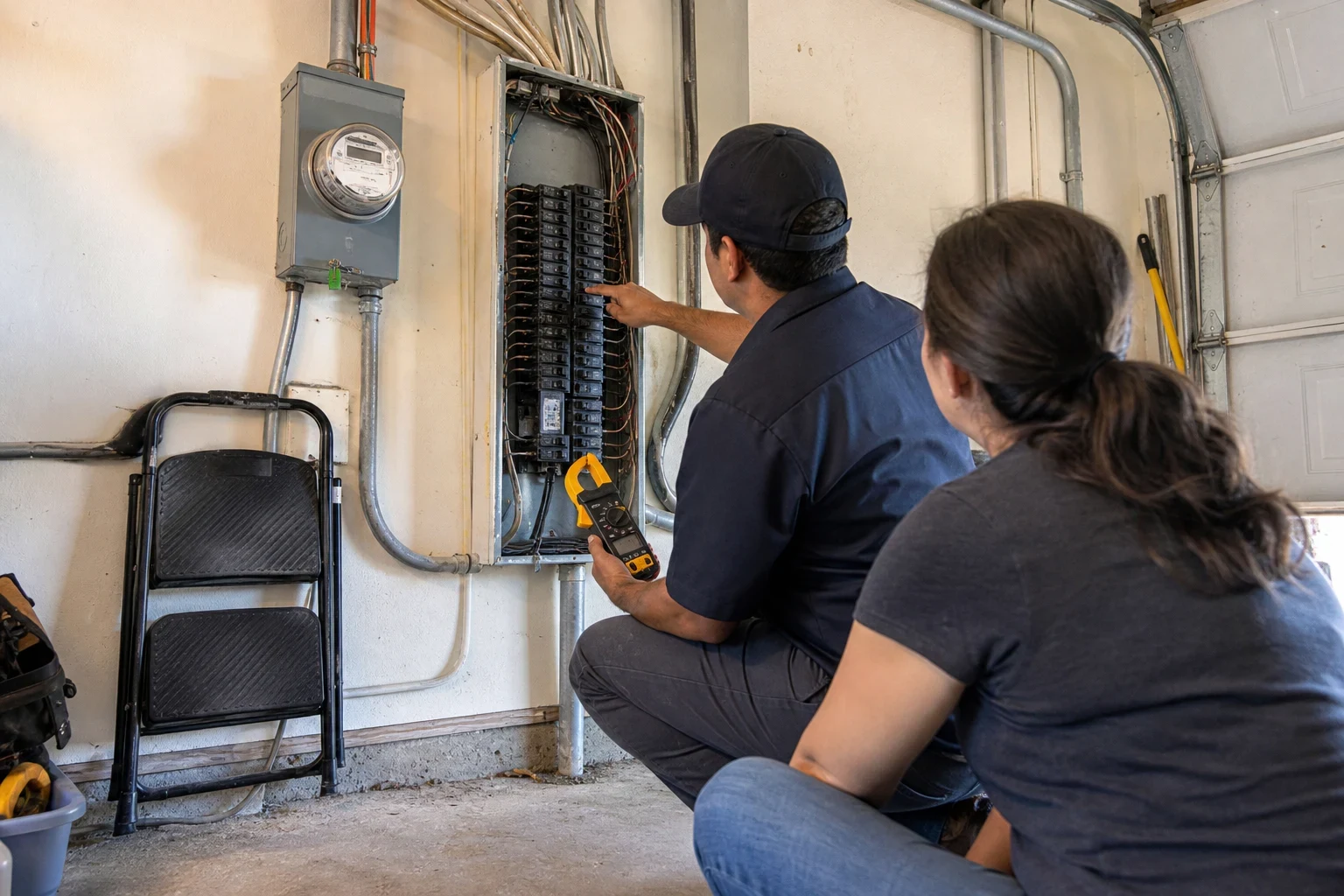
While the cover is off, we look for darkened insulation, pitted bus stabs, melted breaker housings, double-tapped terminals and moisture tracks. You get photos of anything that needs attention.
- 05
Protection and cleanup
Drop cloths go down under indoor panels, and we keep tools and debris off your landscaping at exterior equipment. The area is wiped down and the panel cover reinstalled before we leave.
Questions about Torque & Cleans?
Call(682) 281-8982Signs your panel is due for one
Heat at one breaker handle
If one breaker, or the cover right around it, runs noticeably hotter than its neighbors, the usual culprit is a loose wire screw or a weak grip where the breaker clips onto the bus.
Lights dim when the AC starts
Brief dimming at compressor startup is common, but heavy or growing flicker can mean resistance at the main lugs or a neutral connection.
Buzzing or a hot smell
A faint sizzle or a smell like hot plastic near the panel suggests a joint that is heating. Leave the cover on and have it checked soon.
Years without the cover off
If nobody has opened your panel since it was installed, the connections have been through years of thermal cycling with no check.
An exterior panel or meter-main
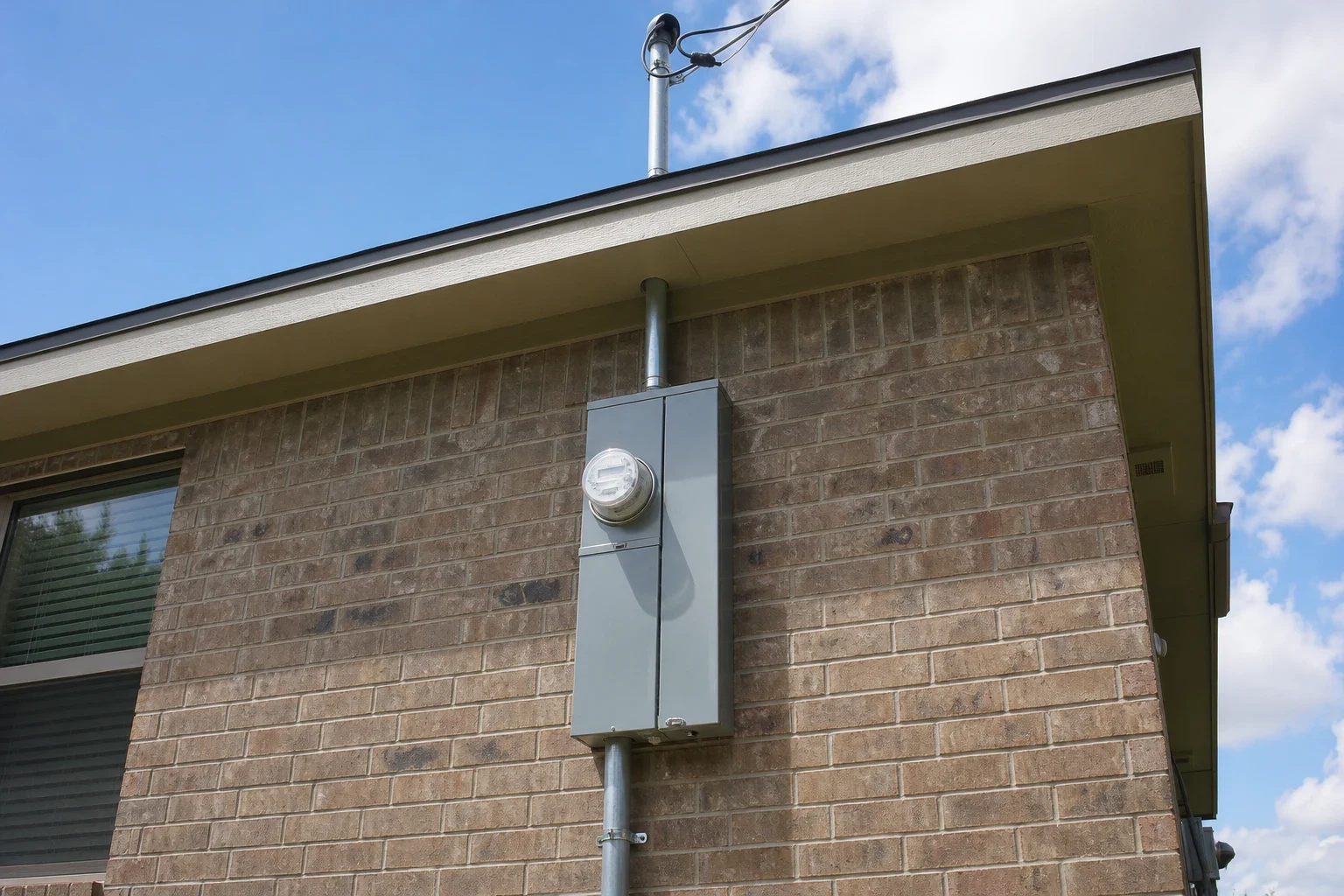
Outdoor enclosures collect dust, moisture and wasps. Gaskets age in the sun, and corrosion on lugs raises resistance over time.
How the appointment runs
- 1
Walkthrough and plan
We confirm where the panel is, which devices need care during the outage, such as refrigerators, medical equipment or a home office, and how long power will be off. You know the timeline before the main breaker moves.
- 2
Protect the work area
We lay floor covering at indoor panels and set down mats at exterior equipment so beds and turf stay intact. Pets and kids are kept clear of the open enclosure.
- 3
De-energize and verify
We turn off the main and test for absence of voltage. The utility side above the main breaker stays live, so we treat those conductors as energized throughout.
- 4
Torque, clean, inspect
Each connection is brought to its rated value, the enclosure is cleaned, and every terminal and bus stab is inspected and photographed where it matters.
- 5
Restore power and report
We re-energize circuits one at a time, confirm they hold, and walk you through what we found in plain terms, including anything worth a repair conversation.
What affects the price
Most of the cost is time with the cover off, and that depends on what is inside. On the call, we ask about your panel and settle the visit price before anything goes on the calendar. If we find damage, repairs are priced on their own and happen only after you say yes.
- Number of panels
- A main panel plus a subpanel in the garage or a detached shop means two enclosures to de-energize, torque and clean.
- Panel size and fill
- A full 40-space panel has far more terminals to check than a small 20-space load center.
- Condition inside
- Heavy dust, nests or corrosion take longer to clear, and oxidized aluminum lugs need extra prep before re-torquing.
- Location and access
- An exterior meter-main is quick to reach. A panel behind shelving or in a tight closet takes setup time.
Torque and clean questions
How long will the power be out?
With one typical home panel, expect the power to be off for part of the visit, generally no more than a couple of hours. A bigger panel or an added subpanel takes longer. Before anything is shut off, we give you the expected window so you can plan for the refrigerator and any equipment that needs to be powered down properly.
How often does a panel need this service?
No fixed schedule applies to every home, but a check every few years helps most panels, and earlier makes sense with aluminum conductors, an outdoor panel or long summer cooling loads. If the cover has never come off since the panel went in, a first check is a good idea.
Is this worth doing on a newer panel?
Even a new panel can have connections that were never tightened to spec, a shortcut that happens often at install. Checking the torque once after the first few years of use confirms the joints are correct, and later checks can be spaced further apart.
What if you find a burned bus or a damaged breaker?
We pause, show you photos and explain what caused it. A scorched breaker generally has to be replaced, and a pitted bus stab can mean that space should be retired or that the panel is close to the end of its life. Repairs are quoted on their own, and our panel upgrades page covers replacement if it gets to that point.
Does someone need to be home?
For the beginning and the end, yes. We go over the shutdown plan with you before the power is cut and review what we found once it is back on, so you know exactly what was done.
Get your panel tightened and cleaned
Tell us where your panel sits and roughly how old it is, and we will plan the outage around your day. Floors and beds get covered before the cover comes off.