ServicesElectrical Repair
Electrical Repair in Forest Hill
A receptacle with no power, a breaker that snaps off the moment you reset it, a light that flickers for no clear reason. We trace each one to the failed part or loose connection and repair it there. Your floors stay covered, and we explain what broke before we leave.
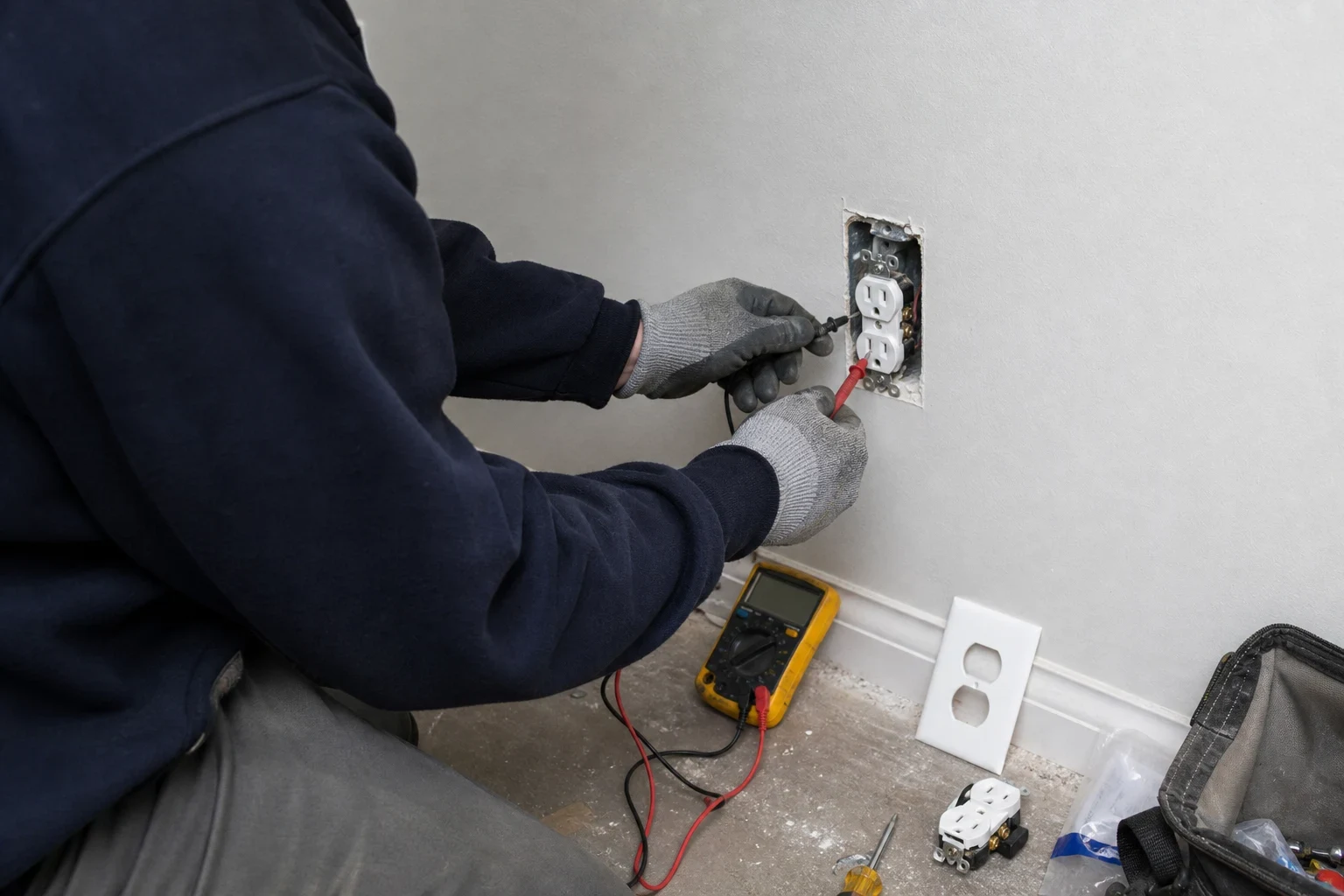
Repairs that start with a meter, not a guess
Nearly every repair call we take traces back to one of four things: a connection that has loosened or burned, a breaker past its working life, a device that has failed, or a circuit asked to carry more than its wire was sized for. Before we replace anything, we work out which one it is with a multimeter, a plug-in circuit analyzer and a non-contact tester. That way you pay for the part that actually failed, not for guesses.
Repairs happen inside your living space, so we work like guests. Shoe covers go on at the door, drop cloths go down under every box and panel we open, and when we need an exterior outlet or the meter base we stay off your beds and edging. Before we leave, you get a plain account of what failed, why, and what we did about it.
If a repair uncovers something bigger, such as aluminum branch wiring or a panel whose bus no longer grips a breaker tightly, we tell you and lay out the options, including panel upgrades or whole-home rewiring, without pushing either.
What our electrical repair covers
Dead outlets and switches
We check for a tripped GFCI upstream, a push-in backstab connection that has let go, or a cracked device. Failed receptacles are replaced with tamper-resistant devices, and wires move from backstabs to the screw terminals, which hold far more reliably.
Breakers that keep tripping
We measure the load on the circuit and test the breaker itself. A circuit tripping because a space heater and microwave share 15 amps needs a different fix than one tripping on a ground fault or a worn breaker mechanism.
Flickering and dimming lights
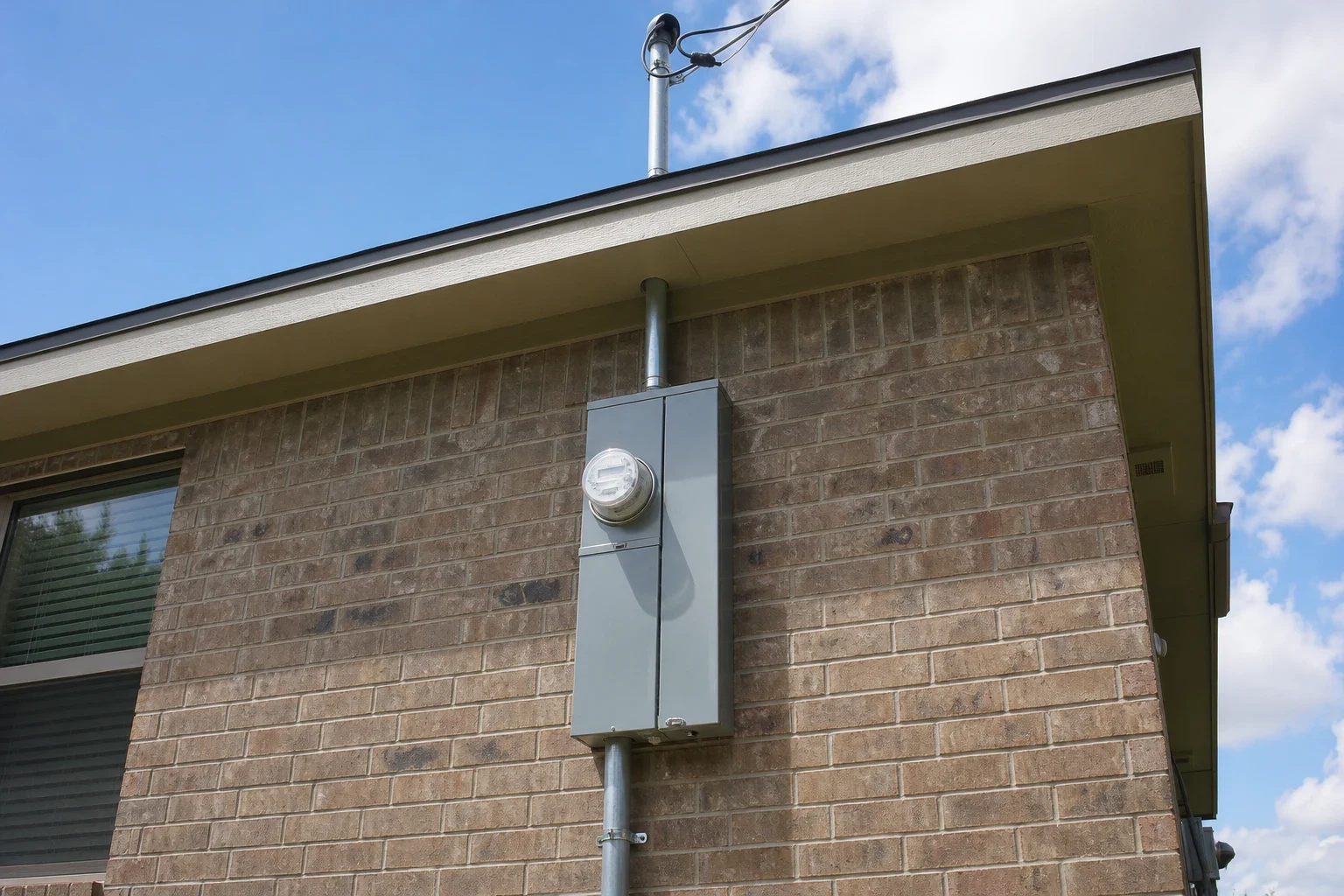
Flicker at one fixture usually means a loose lamp socket or a dimmer not rated for LED loads. Lights across the house dimming when a big appliance starts can point to a loose neutral, which we trace back to the panel and service connection.
Warm, buzzing or scorched parts
Heat at a switch plate or receptacle means resistance at a connection. We open the box, cut damaged conductor back to clean copper, and remake the splice with connectors sized for the wire.
GFCI and AFCI troubleshooting
When a bathroom, kitchen or garage GFCI won't reset, or an AFCI trips with nothing running, we isolate whether the device, the wiring or something plugged in is the cause.
Exterior outlets and fixtures
Outdoor receptacles wear out from water and sun. We replace them with weather-resistant GFCI devices under in-use covers and repair damaged exterior fixtures without trampling what's planted around them.
When a Repair Call Makes Sense
- One breaker keeps tripping
- A single trip after too much load means the breaker worked. Trips that keep coming point to a short, a ground fault or a circuit too small for what it feeds.
- A burnt smell or a stained cover plate
- Browned or melted plastic at an outlet shows a connection has been running hot. Turn that circuit off at the panel and keep it off until someone checks it.
- Plugs slip out of the outlet
- Worn receptacle contacts spark whenever the load changes, and that sparking heats both the device and the wire feeding it.
- Lights drop when big appliances kick on
- A quick dip is expected. A deep or lingering one hints at a weak connection, and with the AC cycling through a Forest Hill summer, that connection takes the strain many times each day.
- Part of a room goes dead
- When some outlets die and others keep working, the cause is often a failed splice or an open neutral in a single box. It seldom clears up on its own and usually gets worse.
- A slight shock from a fixture or appliance
- Even a faint shock suggests a grounding fault or worn insulation. Unplug the item and stay off that circuit until we test it.
How a repair visit runs
- 1
You describe the problem by phone
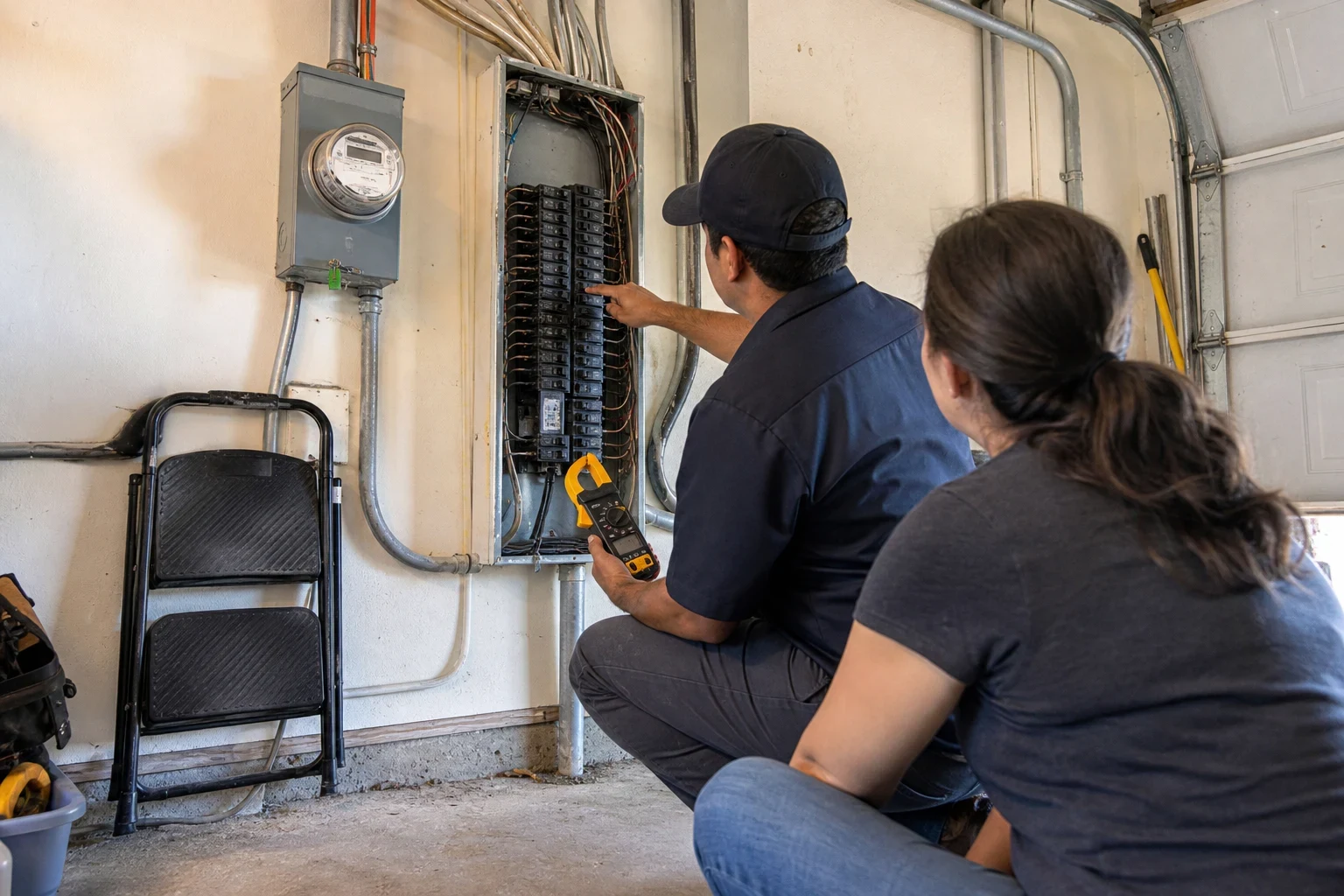
Tell us which rooms are affected, what was running when it happened and anything you smelled or heard. We set a time and let you know what to clear so we can reach the panel and the problem areas.
- 2
We protect the work area
Shoe covers and drop cloths go down first. We tell you which circuits we'll shut off and roughly for how long, so you can plan around the refrigerator, a home office or a medical device.
- 3
We test and explain the cause
We trace the fault with test equipment, show you what we found, and give you the price of the repair before doing work beyond the diagnosis.
- 4
Repair, retest and clean up
We make the repair, retest the circuit under load, and restore power. Old parts leave with us, and any dust from opening a box gets vacuumed up.
What sets the price of a repair
You get the repair price once we've found the cause and before we start the fix. Most of the cost comes from the time it takes to trace the fault and the parts needed to correct it. Simple device failures cost less than faults hidden inside walls or ceilings.
- How hard the fault is to find
- A problem that is present when we arrive is quicker to trace than an intermittent one that only shows up under certain loads or temperatures.
- Access to the wiring
- Wiring reachable from a box or the panel is straightforward. Runs through a finished ceiling or a hot attic take longer and need more care to keep drywall and insulation intact.
- Parts involved
- A receptacle or switch is a small part. A breaker, a length of new cable or a replacement fixture adds material cost.
- What's behind the cover
- Heat-damaged conductor, undersized wire or an overfilled box can turn a device swap into a larger repair. We show you what we find before going further.
- Permits
- Some repairs require a permit and inspection. We handle those as the local jurisdiction requires and include them in your price.
Questions About Electrical Repair
- What keeps tripping my breakers?
- Most repeat trips come from one of four causes: more load than the circuit is rated for, a short where a hot wire meets neutral or ground, a ground fault, or a breaker with a worn internal mechanism. Each needs its own fix, so we measure the load and test the breaker before replacing anything. A bigger breaker is never the fix, since the breaker is there to protect the wire.
- How do you know if it's the outlet or the wiring?
- We measure voltage at the device and at the wires supplying it, then check the connections in the boxes before it. That shows whether a new receptacle solves it or the fault lies further along the circuit.
- Do repairs mean opening my walls?
- Usually not, since most work happens through the existing boxes and the panel. When a fault sits inside a wall, we show you where and explain why before any cut, keep the hole as small as possible, and contain the dust.
- Will my repair need a permit?
- If the work calls for one, yes, we pull it. Plenty of device and connection repairs don't, though replacing a circuit run might. You hear which applies before we begin, and we handle the permit and inspection as the local jurisdiction requires.
- Can I still use an outlet that's warm?
- No. A warm receptacle or switch points to resistance at a connection, and the heat keeps building. Shut off that breaker, stop using the outlet and get it checked.
- What happens if the repair uncovers a larger problem?
- We explain what we found, show you the damaged part, and go over your options with their costs. It is your call whether to handle the immediate fix now and schedule the bigger work later.
Get the fault found and fixed
Tell us what's happening and we'll arrange a visit. We cover your floors, trace the cause and explain the repair before we start it.